Forest Hill — spotted gum deck & jasmine trellis screens
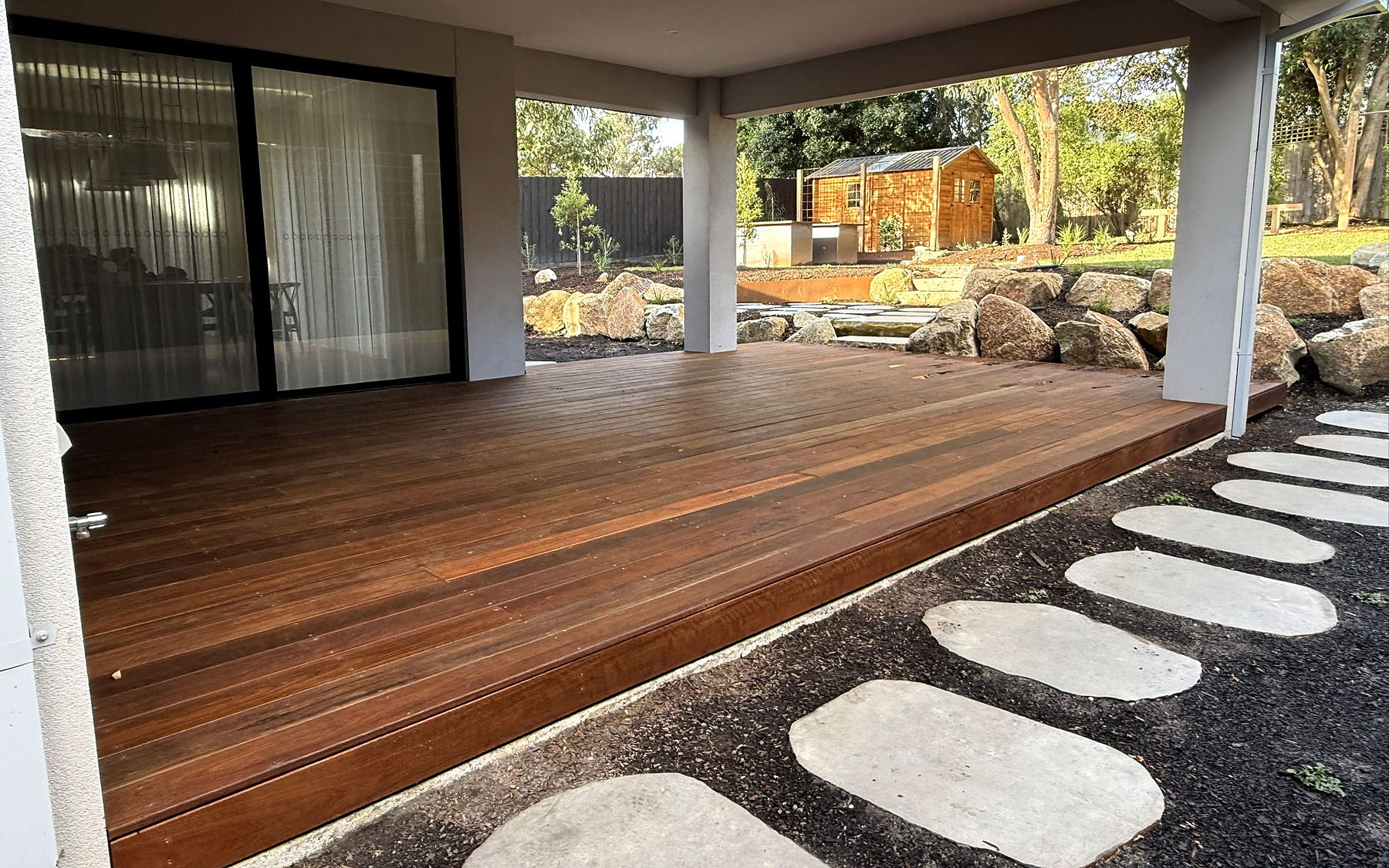
A spotted gum deck running the length of the alfresco, with every board pre-coated in Cutek penetrating sealer before it went down, and jasmine trellis screens lifting the privacy along the boundary fence. The same approach to both — get the parts nobody sees right, and the finish looks after itself.
Spotted gum, sealed before a single board went down
The deck is spotted gum — a dense Australian hardwood with the hardness and natural durability to take weather and traffic, and a grain that ranges from pale honey through to deep chocolate. Under an alfresco roof like this one, that colour holds beautifully.
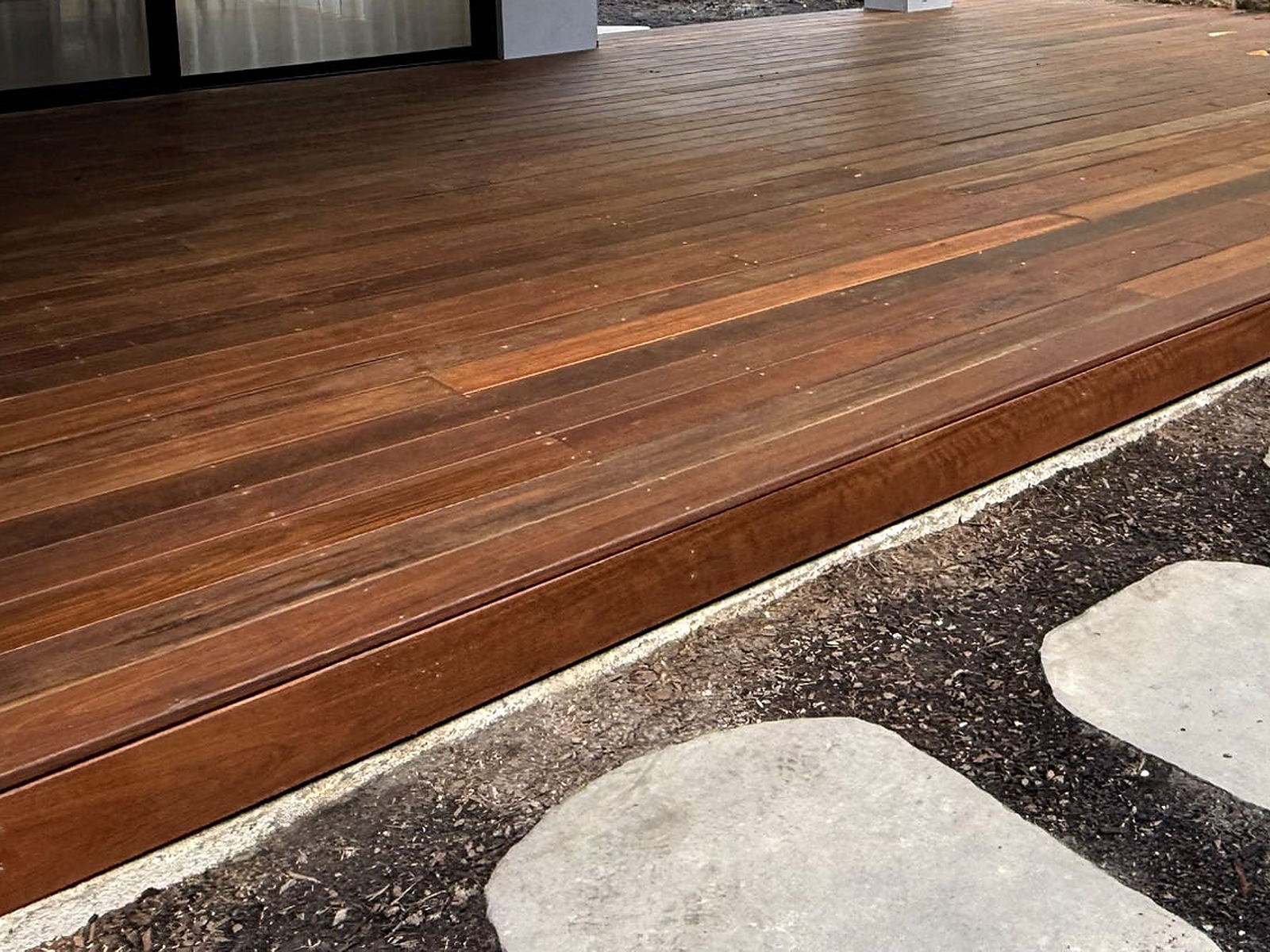
Every board was pre-coated with Cutek penetrating sealer before installation. This matters more than it sounds. Once a board is screwed down, its underside and its ends are sealed off from you forever — and end grain is exactly where hardwood pulls in moisture fastest. Coat only the top after the deck is built and you have a board that is protected on one face and bare on the other three, taking up and giving off moisture unevenly. That imbalance is what makes hardwood decks cup, twist and split. Sealing all four faces and the end grain first evens the whole board out. Any ends we cut during installation were re-coated on site before fixing, so no raw end grain is buried in the deck.
Cutek is a penetrating oil, not a film. It works inside the timber by moderating how much moisture the wood takes on, rather than forming a skin on the surface. That is the difference between a deck that weathers back gradually and can be topped up with a clean and a re-coat, and one coated in a film-forming varnish that eventually blisters and peels and has to be sanded back before it can be redone.
Jasmine trellis screens along the fence line
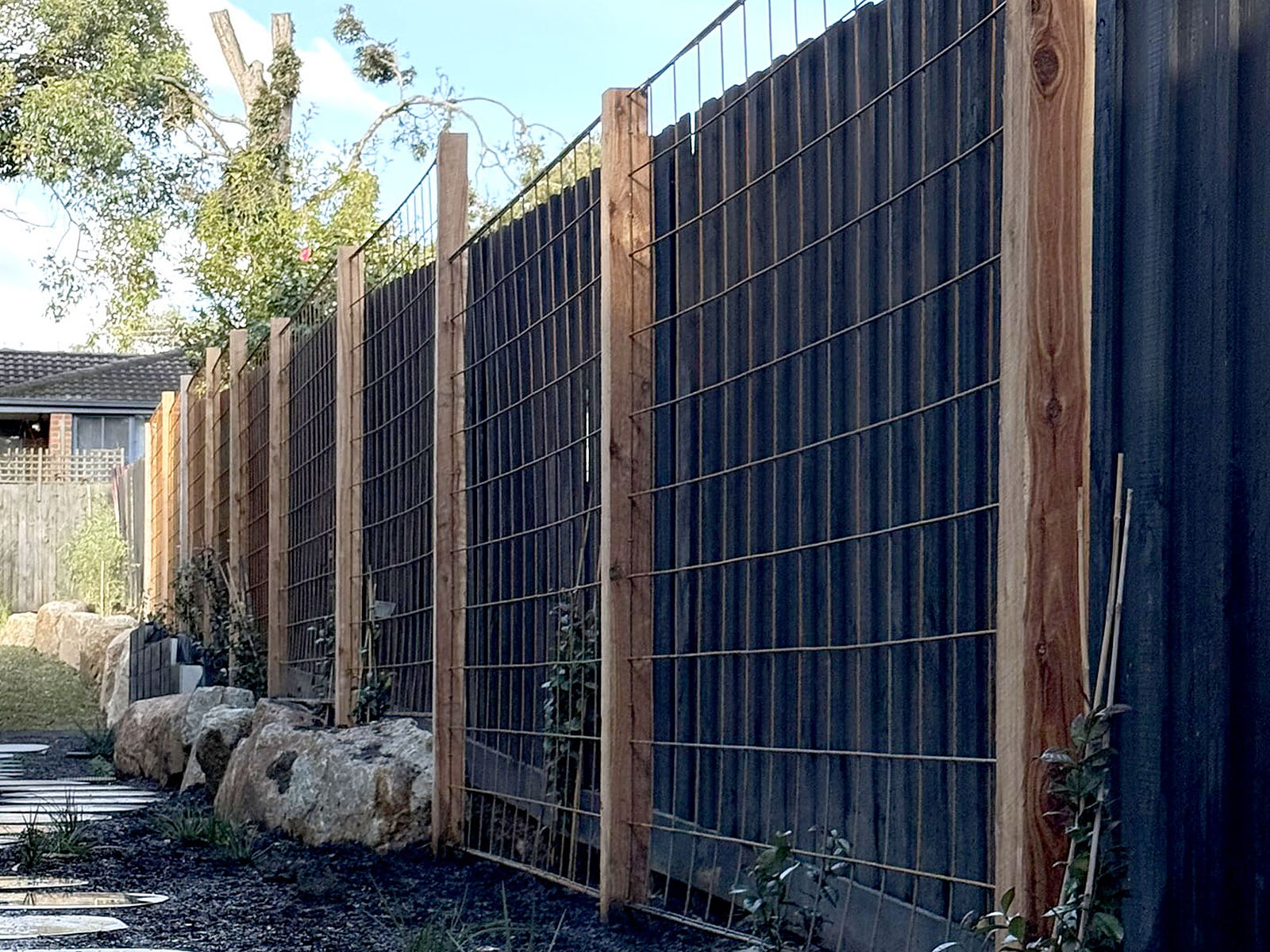
Along the boundary we built trellis screens — hardwood posts with tensioned wire panels standing above the existing fence — and planted jasmine at the base to climb them. It's a way of adding height and privacy on a boundary without building a taller solid fence, which would need a permit in many cases, cost considerably more, and cast far more shade.
The posts and wires are the permanent part, so they're built to outlast the planting: posts set properly, panels squared and tensioned so they don't sag or rack. The jasmine does the rest. Expect real coverage over two to three growing seasons, and the single thing that makes the most difference is training the new growth sideways onto the wires while it's soft, so the plant spreads across the screen instead of racing up one narrow column.
What went into this build
Decking, stone & screening questions
More from this property
Services used on this project
Nearby areas we serve
Want a deck built like this one?
Free on-site consultation. We'll measure up, talk through timber, coatings and detailing, and give you an honest, itemised quote.
Get a Free Quote →0422 490 962