Home Services Portfolio About Costs Estimate Areas Contact
Get a Free Quote → 0422 490 962
Melbourne Eastern Suburbs · Retaining Wall Construction

Retaining Walls

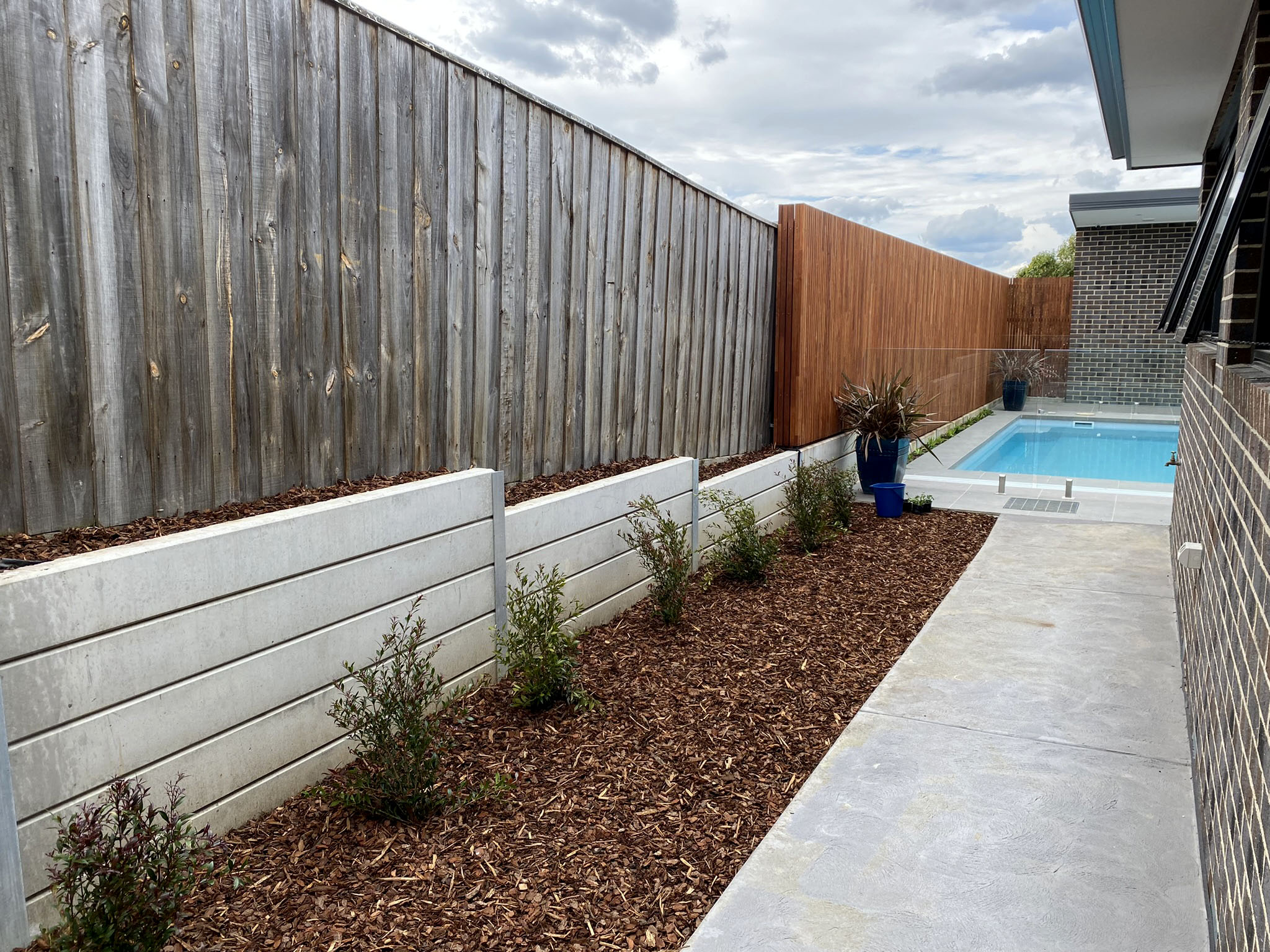
Pool surround with retaining wall and paving

This is where technical knowledge matters most. Retaining walls need proper drainage, correct compaction, and the right system for the height and soil conditions. With a building and engineering background, we design and build retaining walls that handle Melbourne's reactive clay, slope and load — not walls that lean, crack or fail within a few years because someone skipped the fundamentals.

5.0 Google & Hipages Rating
250+ Projects
Building, Design & Engineering Qualified
Fully Insured
What's Involved

Engineering that starts below the surface

Most retaining wall failures happen because of what you can't see — undersized footings, missing drainage, and backfill that holds water instead of releasing it. Melbourne's eastern suburbs sit on reactive Silurian clay that swells when wet and shrinks when dry, constantly pushing against any structure in the ground. A wall built without respect for that movement will lean, crack or collapse, sometimes within a single wet season.

Our engineering background means we approach retaining walls as structural work, not just landscaping. We assess the fall, the soil classification, the retained height and the load behind the wall before deciding on a system. Every wall gets footings sized for the soil conditions, an ag-drain at the base, free-draining aggregate backfill, and engineering certification where the height or boundary proximity requires it. The visible wall is the easy part. What makes a retaining wall last decades is everything behind and beneath it.

Materials & Approach

The right system for your site

On-site assessment of fall, soil classification, load and access
Engineering certification for walls over 1 metre or near boundaries
Concrete sleeper between galvanised steel posts — the workhorse for Melbourne clay
Treated-pine and hardwood timber sleepers for lower walls and garden terracing
Natural stone and rendered block for higher-end finishes
Ag-drain and free-draining aggregate backfill behind every wall
Footings sized for reactive clay, not a generic specification
Indicative Pricing

What retaining walls typically cost

Walls are priced per lineal metre or per square metre of wall face, depending on the system:

Timber sleeper retaining: $250–$500/lm
Block & concrete sleeper retaining: $400–$750/lm
Per m² face — treated pine: $350–$500
Per m² face — concrete sleeper: $500–$750
Per m² face — natural stone: $700–$900+
Engineering certification (where required): $1,500–$3,000

Every site is different — slope, access, height and soil all move the number. See our costs guide or get a free, itemised quote.

Related

Retaining walls by area

FAQ

Retaining wall questions

How much do retaining walls cost?
Retaining walls are typically priced per lineal metre or per square metre of wall face. Timber sleeper walls run $250 to $500 per lineal metre. Block and concrete sleeper walls run $400 to $750 per lineal metre. Per square metre of wall face, expect $350 to $500 for treated pine, $500 to $750 for concrete sleeper between steel posts, and $700 to $900 or more for natural stone. Engineering certification, where required, typically costs $1,500 to $3,000.
Do I need a permit for a retaining wall?
In most Melbourne councils, retaining walls over 1 metre in height require a building permit and engineering certification. Walls near boundaries or that affect a neighbour's land may also need consent. We assess permit requirements on site, organise engineering where it's required and build to the certified design so your wall is compliant and insurable.
What's better — timber sleeper, concrete sleeper or stone?
It depends on the height, soil conditions and your budget. Treated-pine timber is the most affordable option for lower walls but has a shorter lifespan. Concrete sleeper between galvanised steel posts is the workhorse — strong, cost-effective and handles clay well. Natural stone and rendered block suit higher-end gardens where appearance is a priority. We recommend based on your site conditions and budget, not on what's easiest to install.
Why do retaining walls fail?
The number-one cause is poor drainage. Without an ag-drain and free-draining backfill behind the wall, hydrostatic pressure builds up and pushes the wall forward. Undersized footings in expansive clay are the second most common cause — the soil moves seasonally and the wall can't handle the lateral load. We build every wall with drainage and footings sized for the soil, which is why ours last.
How do you handle drainage behind retaining walls?
Every retaining wall we build includes an agricultural drain at the base and free-draining aggregate backfill behind the wall. This prevents water from building up behind the wall and creating the hydrostatic pressure that causes most failures. We also ensure the drainage connects to stormwater or a suitable outlet. On Melbourne's reactive clay, getting drainage right is the single most important part of the job.
Get Started

Need a retaining wall built properly?

Free on-site assessment of your slope and soil. We'll advise on materials, permits and drainage, then give you an honest, itemised quote.

Get a Free Quote →
0422 490 962